
Finding the Sweet Spot: The Science and Art of Training Frequency in Youth Sports
In Vienna's trendy city center, a paradox is playing out in the Burggasse training hall of Wien Taekwondo Centre. While some children stride into the studio five or six days a week, moving with confidence through increasingly complex patterns, others arrive just once every seven days—and they struggle to keep pace. One group risks burnout before their tenth birthday. The other faces a different kind of exhaustion: the frustration of perpetual incompetence.
This tension between too little and too much training reveals something fundamental about youth sports that many well-meaning parents misunderstand. More isn't always better. Neither is less.
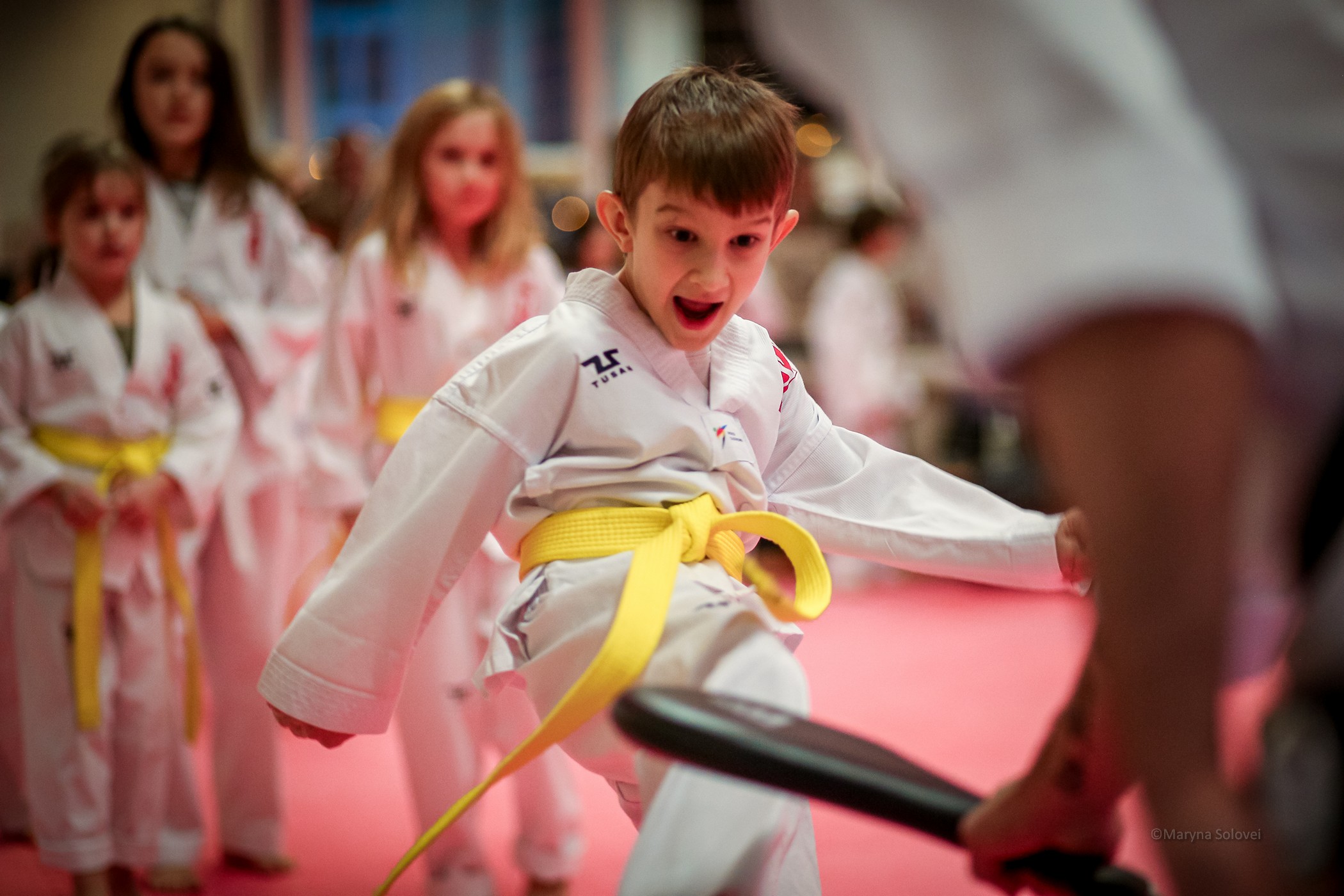
The Problem of Inconsistency
Wien Taekwondo Centre has grown into Austria's largest taekwondo facility, serving over 350 members ranging from four-year-olds taking their first steps on the mat to adults training for international competition. In recent years, the school has observed a troubling pattern: children who attend just once a week struggle significantly more than their peers.
The reasons are both technical and psychological. Taekwondo, as taught at Wien, is not simple repetition of kicks and forms. Students learn an extensive curriculum encompassing technique, vocabulary, theory, and philosophy. The material builds progressively. A child attending once weekly carries barely enough momentum from one session to the next. By the time they return, they've forgotten half of what they learned.
More critically, they've fallen behind their classmates.
"We see this regularly," explains the leadership at Wien. "Young children who attend once a week simply cannot integrate effectively with those attending two or three times weekly. They're learning different material at a different pace. This leads to isolation within the class and, ultimately, demotivation."
The evidence is visible in the belt progression rates. Wien's center has children who remain white belts despite months of enrollment—almost invariably, these are the once-weekly attendees. For young learners, whose cognitive development is still forming, inconsistent training becomes cognitively exhausting rather than engaging.
The Overtraining Trap
Yet Vienna's taekwondo community also reveals the opposite problem: dedicated young athletes training seven days a week, attending classes every single day offered—and beginning to show signs of burnout before adolescence.
Sometimes these children are pursuing competitive excellence with parental support. Often, however, there's a different dynamic at play. The training center has become a convenient childcare solution, a place to keep a teenager away from screens and "bad influences." The child becomes a spectator in their own athletic development, showing up because parents insist on it rather than pursuing it themselves.
For older members—particularly those with impairments for whom the taekwondo center serves as a vital social hub—daily training can be genuinely enriching. They're building community, managing their health, and experiencing moments of genuine belonging. But even for this group, the research is clear: more training doesn't mean better training.
"We don't even recommend seven days a week for our competition team athletes," Wien's coaches note. The pattern they've developed through experience aligns with what sports science increasingly demonstrates: optimal training frequency isn't about maximizing mat time. It's about sustainable progression.
The Goldilocks Principle: Finding What's Just Right
Wien Taekwondo Centre's recommendations reflect years of observation and proven results:
For young children (all ages, recreational members): 2-3 times per week. This frequency allows the brain to consolidate learning between sessions while keeping material fresh enough that progression feels achievable. It's enough to build skill and confidence. It's not so much that early childhood becomes defined by structured activity.
For school-age competition athletes (through age 12): 3-4 times per week. This increases in line with greater maturity and focus capacity. But it deliberately stops short of daily training. The reasoning is deliberate: children need space for other forms of play, other sports, music, and the unstructured time that builds resilience and joy.
For teenage and adult competition athletes (ages 12+): 5-6 times per week. Only at this stage, when athletes are physically mature and have made genuine choices about their path, does frequency approach maximum. Even then, one day of rest remains important for recovery and life balance.
These aren't arbitrary numbers. They're based on observable fact: athletes who train at these frequencies progress faster than those training daily. They also sustain their engagement longer. They're less likely to quit by age fifteen.
Beyond the Mat: The Complete Athlete
There's a philosophical principle embedded in Wien's approach that extends beyond taekwondo itself. The center explicitly believes that a well-developed young person needs a full-sided sports experience. Music classes matter. Team sports matter. Time with friends, unstructured play, and yes, even time with family matter.
An athlete training seven days a week at twelve years old isn't developing resilience across multiple contexts. They're not learning what they're capable of in soccer, or debate, or drama. They're becoming narrowly specialized at an age when specialization is premature.
"If we overdo it, it's as bad as not doing it often enough," Wien's coaches emphasize. Too little training breeds frustration and incompetence. Too much breeds exhaustion and resentment. The middle path is harder to find than either extreme, but it's the only one that works.
A Message to Parents
This is difficult advice to give. Parents naturally want to give their children every advantage. In a world of increasing screen time and childhood obesity, putting a child in structured sports feels responsible. Sometimes it is. But there's a point at which more activity becomes excessive.
Parents should have a genuine conversation with their children about training frequency. Not "I've decided you're doing taekwondo three times a week," but "How often would you like to train? What are your goals? What else do you want time for?"
If your child is showing signs of stress about training, complaining of fatigue, or losing enthusiasm for something they once enjoyed, the problem might not be taekwondo itself. It might be too much of a good thing.
A Message to Athletes
For teenagers and adults, the conversation is different. Taekwondo is something you can do your entire life. It's never too late to start, and it's never too late to deepen your practice.
But before committing to heavy training frequency, be honest about your motivations. Are you training toward genuine goals? Are you pursuing competition, technical mastery, fitness, or community? Different goals suggest different frequencies. An athlete aiming for national competition requires different commitment than someone seeking fitness and friendship.
"Set up a list of goals and objectives," Wien's coaching staff suggests. "Talk to your trainers about what the best path is for reaching them." Not everyone needs to be a competition athlete. That's not a failure. It's wisdom.
The Bottom Line
Taekwondo—like any meaningful discipline—requires consistency. But consistency doesn't mean constant availability. It means showing up regularly enough to progress, not so regularly that you exhaust yourself.
For most young people, that means two or three times a week. For aspiring competitive athletes, it means carefully escalating frequency as they mature. For everyone, it means remembering that the goal isn't to maximize training. The goal is to build competence, confidence, and lifelong engagement with a discipline that can serve you for decades.
Come often enough. Train hard enough. But don't overdo it.
That's the sweet spot. And once you find it, you'll be surprised how far you can go.